


From the Westport Weston Chamber of CommerceOn Saturday, December 4th at 7:30 pm, Chris Frantz of Talking Heads and Tom Tom Club fame will kick off his new series, Chris Frantz Presents: Emerging Musicians at the Westport Library. The inaugural concert will feature New York City’s Lulu Lewis and New Haven, Connecticut’s The Problem with Kids Today.
This is another music collaboration and production by Verso Studios at the Westport Library and the Westport Weston Chamber of Commerce. The series will feature up and coming regional, national, and international talent, hand-picked by Frantz, with the goal of bringing new music to new ears and be an incubator for rising talent.
“It’s fantastic to see Lulu Lewis shape up into such a groovy, dark, post-punk band,” said Chris Frantz. “I’m particularly excited to catch The Problem with Kids Today who have caught my eyes, ears, love and attention. If this night doesn’t take us straight back to the CBGB’s days, I don’t know what will.”
“Verso Studios at the Westport Library is thrilled to be aligning local and regional talent for a night to remember,” remarked Westport Library Executive Director Bill Harmer. “With our amazing friend Chris Frantz curating the talent, and our performance space, state-of-the-art equipment, and outstanding staff, this is going to be a killer night of sights and sounds.”
“Bringing new music and bands to people’s attention is our goal,” said Matthew Mandell, Executive Director of the Chamber. “You never know if you’ll be seeing the next U2 when you come. Steps like this can really propel a band forward.”
Straight from the soul of the Bowery, Lulu Lewis brings a multi-faceted offering in the world of modern rock. Founded by Dylan Hundley (Metropolitan) and Pablo Martin (Tom Tom Club), Lulu Lewis’s influences are far and wide but can best be aligned with post-punk, gothic, soul, and new wave. Their debut LP, Genuine Psychic, arrived in July 2019 on Ilegalia Records. The Vinyl District exclaims, “…album highlight ‘Intelligent Life’ manages to blend Mechanical Man era Devo with the Tubeway Army and the joyous Saturday afternoon B-movie matinee energy of the early B-52’s, all while wielding social commentary with a sense of humor. And if that’s not punk, then go eat a sock.”
The Problem with Kids Today is a hot trio of rock ‘n’ roll delinquents with Tate Brooks leading the charge on guitar/vox/mic head-butting, Stone-Cold-Silas Lourenco-Lang on low end bass/vox, and Reena Yu pounding on drums. TPWKT’s fun, wild shows and feverish, fashionable following evoke the Mercer Center Arts era of the New York Dolls. Fast, combustible, lewd and spontaneous – they have all the gems of a fantastic live act. With a debut album recorded at Sans Serif Studio in New Haven on the way this winter, teaser tracks like You’re in Love With Junk and Fly Boy can be found on the band’s Bandcamp site as well as major streaming platforms.
To purchase tickets go to https://bit.ly/3vbdmh2

Yale Looks Back on First In-Utero Spina Bifida Procedure, Performed in the Midst of the Pandemic
Contributed by Yale New Haven Health In April 2020, as the world shuttered and health systems were laser-focused on fighting a novel coronavirus, 25 year old Tianna Borst and her unborn daughter prepared to undergo a transformative surgery at Yale New Haven Children’s Hospital (YNHCH) to correct a rare form of spina bifida.
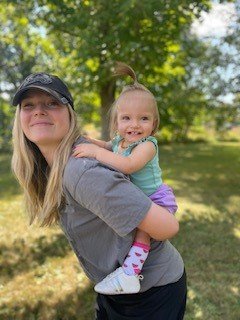
Tianna and her daughter Savera, now 17 months old. At 20 weeks pregnant, Tianna was told her baby had a condition in which the fetus’ backbone and spinal sheath fail to close, exposing the spinal cord and its connecting nerves. “I had never heard of spina bifida,” said Tianna. “I was given the results and left to think the worst. I thought I would lose my baby.”
Tianna, a vet tech at an animal hospital in Michigan, began researching the condition and her options. “I was surprised to learn that every form of spina bifida is its own special snowflake and no other experience would necessarily match mine.” It was during this time that Tianna and her mother separately came up with the perfect name for her daughter, Savera – which translates in Hindi to “new beginning.”
Tianna temporarily moved in with her mother in Connecticut who recommended she connect with providers at Yale New Haven Children’s Hospital. Little did Tianna know, the team at YNHCH had spent the past two years studying and training for a case just like Tianna’s, which would be the first of its kind in Connecticut.
Historically, when a fetus is diagnosed with spina bifida, the closing of the spinal cord is done after birth. This doesn’t protect against potential damage that can occur in the womb, including brain damage from too much or too little cerebrospinal fluid and damage to exposed nerves. Many babies who are treated for spina bifida after birth cannot control their bladder or bowels, need lifelong shunts in their brain to drain fluid and cannot walk without crutches.
However, a multicenter study published in The New England Journal of Medicine showed that when the spinal repair is performed before birth there is a greater chance the child will be able to walk, go to bathroom independently and have a reduced risk of cognitive issues. This is because a lot of the damage that occurs in the womb is prevented and there is a chance for damaged nerves to repair.
There are other factors for a family to consider when opting for this surgery. The baby could be born prematurely or still need a shunt. There are potential complications of future births for the mom because surgical incisions could rupture, and the pregnant person needs the ability to be on bedrest for the remainder of the pregnancy.
“The moment the initial study on this procedure came out our team and our colleagues in Fetal Care Center knew this was something we had to pursue,” said Ozan Bahtiyar MD, director of the Yale New Haven Children’s Hospital Fetal Care Center. “We trained and studied and waited for the appropriate case to come along. For the right person at the right time this in-utero spinal-repair can give a baby the best possible outcome.”
Tianna had a support system, the ability to take the necessary weeks to recover and her baby’s particular case showed a positive risk-reward profile for this delicate procedure. When the day of surgery arrived, Tianna, then 26 weeks pregnant, felt prepared. “Everyone made me feel comfortable and informed.”
There were 22 people in the operating room including maternal fetal medicine specialist, pediatric neurosurgeons, pediatric surgeons, obstetrical and pediatric anesthesiologists, pediatric cardiologists, nurses, and an ultrasonographer, for the 4-hour surgery. Tianna remembers Eye of the Tiger coming through the speakers to lighten the mood before she was given a deep anesthesia to relax the uterus. It was opened with a technique to keep the fluid surrounding Savera intact and expose only what is necessary. In this case, the repair was needed in the lower spine where the spinal cord was outside the spinal canal and bowed out to attach to the skin. During the surgery the cord was separated from the skin and put into proper position. The hope is that the nerves then begin to repair.
Tianna was sent home to rest. Her outings were restricted mainly to doctor’s appointments. At 36 weeks, Savera was born via C section. “Seeing my daughter for the first time was pure bliss,” said Tianna, who was prepared for a long stay in the neonatal intensive care unit, but Savera was discharged after passing all her tests only four days after delivery.
Savera is now 17 months old and living in Michigan with her mom and dog named Odie. She loves to swim and paint. She speed-crawls, stands and enjoys her biweekly physical therapy sessions.
Tianna requested a video of the surgery that changed her family’s life.
“It was amazing to watch – I have to remind myself that it is me and my daughter on that table. “It was all worth it. Kids surprise you,” said Tianna.
About 1,500 babies are born each year in the U.S. with the type of spina bifida that Savera has, called myelomeningocele. Its severity is dictated by several factors including how high on the spinal cord the opening is located and the type of nerves that are exposed. The medical community is uncertain as to what causes spina bifida. The addition of folate in grains has cut the rate in half since the 1990’s. This research is still ongoing along with research around a combination of environmental and genetic risk factors.