

New York Air Show: Into The Wild Blue Yonder

WestportLocalPress went on a road trip to the Orange County, NY Airport to see the legendary United States Air Force Thunderbirds precision flight squadron on Saturday.
Photos By J.C. Martin For WestportLocalPress.com Click on an image to enlarge and open gallery.
Joining the Thunderbirds this year at the show, flying in the United States for the first time in more than 30 years is the Italian Air Force precision squadron, Frecce Tricolori, which is the world’s largest, with ten aircraft flying exceptional maneuvers. Their tour this year is commemorating the 500th anniversary of Giovanni da Verrazzano's expedition to America in 1524.


The photos above show the Thunderbirds in their signature Diamond formation, flying as close as two feet apart, and Frecce Tricolori’s ten plane Delta formation, with their smoke generators proudly showing the red, white and green of the Italian flag.
Photos And Story By J.C. Martin For WestportLocalPress.com Click on an image to enlarge and open gallery.


Thunderbird signature maneuvers include a vertical climb with each plane banking in a different direction and their canopy-to-canopy slow flight down the runway center line a few feet apart.
The headliner USAF Thunderbirds fly the F-16 Fighting Falcon and perform a combination of formation and solo maneuvers in an inspiring, patriotic, high energy demonstration that thrills and draws gasps from the crowd. To see more on these, some of America’s finest pilots, visit: USAF Thunderbirds.
The show continued on Sunday August 11th. Orange County Airport is less than 1-1/2 hours from Westport, at 500 Dunn Rd, Montgomery, NY.
Visit: NY Air Show for more information. Air shows are held each year at Orange County Airport and on Memorial Day weekend at Jones Beach on Long Island.


Photos And Story By J.C. Martin For WestportLocalPress.com Click on an image to enlarge and open gallery.
Fishing The Sound, Tern-Style


Photos and Story By J.C. Martin For WestportLocalPress.com Click on an image to enlarge and open gallery.
The Common Tern in these photos were part of a group of 6 or 8 that practiced a fishing method called “plunge diving”, where they sight a fish close to the surface, on the wing and then dive into the water, taking the fish. They were not successful each time, but they eventually grabbed a nice dinner. This group may well have been part of colony which nests out on Cockenoe Island.
AllAboutBirds.org states, “Common Terns nest in colonies on the ground in areas with loose sand, gravel, shell, or cobble pebbles typically less than 350 feet from the water. They tend to choose areas with scattered, low-growing vegetation to provide cover for chicks.” Their clutch size is anywhere from 1-4 eggs with an incubation period of 22-27 days.
He’s In There Somewhere!
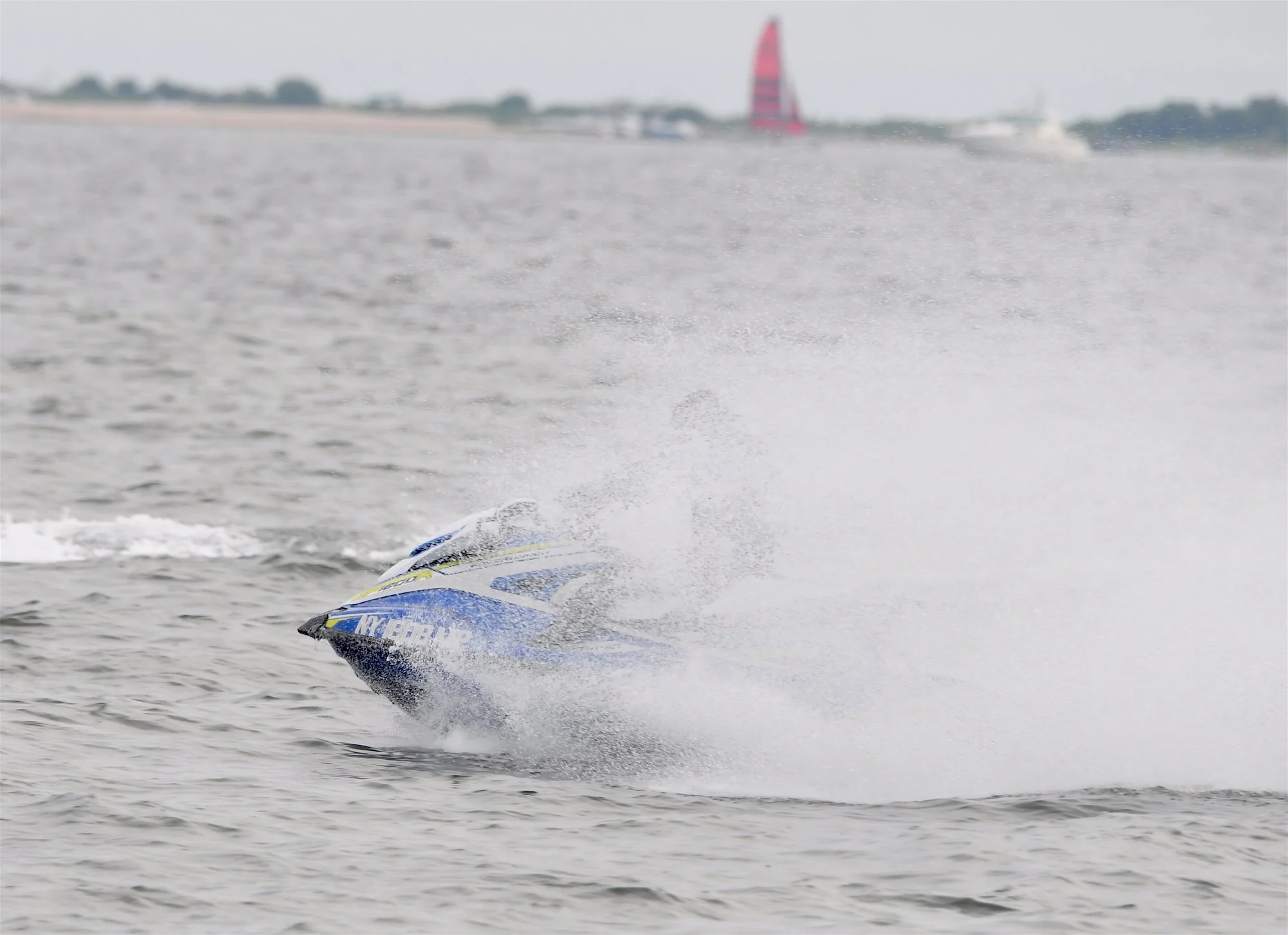
These 3 guys knew a fun, exhilarating way to beat the heat last week, splashing in the Sound on their powerful jet skis.
Photos By J.C. Martin For WestportLocalPress.com Click on an image to enlarge and open gallery.


The guy in blue seemed to be the alpha rider of the trio, pushing the envelope with tight turns at quite a clip, challenging the other riders.


Photos By J.C. Martin For WestportLocalPress.com Click on an image to enlarge and open gallery.
Plovers, Sandpipers, Oystercatchers, OH MY!

A few new families have moved to Westport recently, but they will not be staying long. These beautiful little shorebirds are adult semipalmated plovers (thick black neck band) and adult semipalmated sandpipers (no black neck bands).
Photos and Story By J.C. Martin For WestportLocalPress.com Click on an image to enlarge and open gallery.


According to Laura Saucier of CT DEEP, “This is a mixed species flock of birds that have stopped to feed whilst migrating through CT.” She told WestportLocalPress, “The semipalmated plover is a cousin to the piping plover, which Westport residents may have seen nesting on Compo Beach and Cockoene Island. Semipalmated plovers are shorebirds that show up in Connecticut during migration. They are only passing through our state either on their way to the arctic to breed during late spring, or on their way to overwintering beaches in the southeastern US south to Central and South America in late summer. This bird can be observed feeding in mixed flocks with other shorebird species. It has a thick black band around its neck as well as on its forehead and around its eye. It is darker in appearance than the piping plover.”
Photos and Story By J.C. Martin For WestportLocalPress.com.

Saucier added, “The semipalmated sandpiper is also a species that shows up in Connecticut during migration. It has a similar lifesyle to the semipalmated plover but migrates even further and overwinters primarily in South America. It also can be seen feeding in mixed species flocks on our beaches. This sandpiper is similar in size to plovers and can be difficult to identify with different sandpipier species. It has mottled brown/grey plumage on its head and back and is white underneath. This shorebird has undergone population declines recently therefore it is important to give consideration to it while it is resting and feeding on Connecticut beaches.”

These beauties show a a wonderful contrast with the Oystercatchers which have nested at Compo’s South Beach for several years. The one pictured above may be the female which hatched a couple of eggs earlier this year. In the two photos below, a juvenile Oystercatcher which has been banded by CT Audubon keeps the plover company at the shoreline. The juvenile has a beak which has not yet turned completely orange as in the photo at right of an adult.
Photos and Story By J.C. Martin For WestportLocalPress.com Click on an image to enlarge and open gallery.


These Plovers and Sandpipers, along with the Oystercatchers are protected at Compo’s South Beach by a wire fence erected by CT Audubon and CT DEEP. The Connecticut Department of Energy and Environmental Protection encourages people to share the shore with migratory birds by limiting disturbance to feeding and resting shorebird flocks. Keeping dogs, kites, and bicycles away from the birds allows them quiet areas to rest and fuel up along their long migration.
See WestportLocalPress coverage of the stunningly beautiful Oystercatchers here: Shellfish On The Menu, and here: Busy Oystercatchers
To learn more abut these and other wonderful visitors to our town, visit: Atlantic Flyways.org.