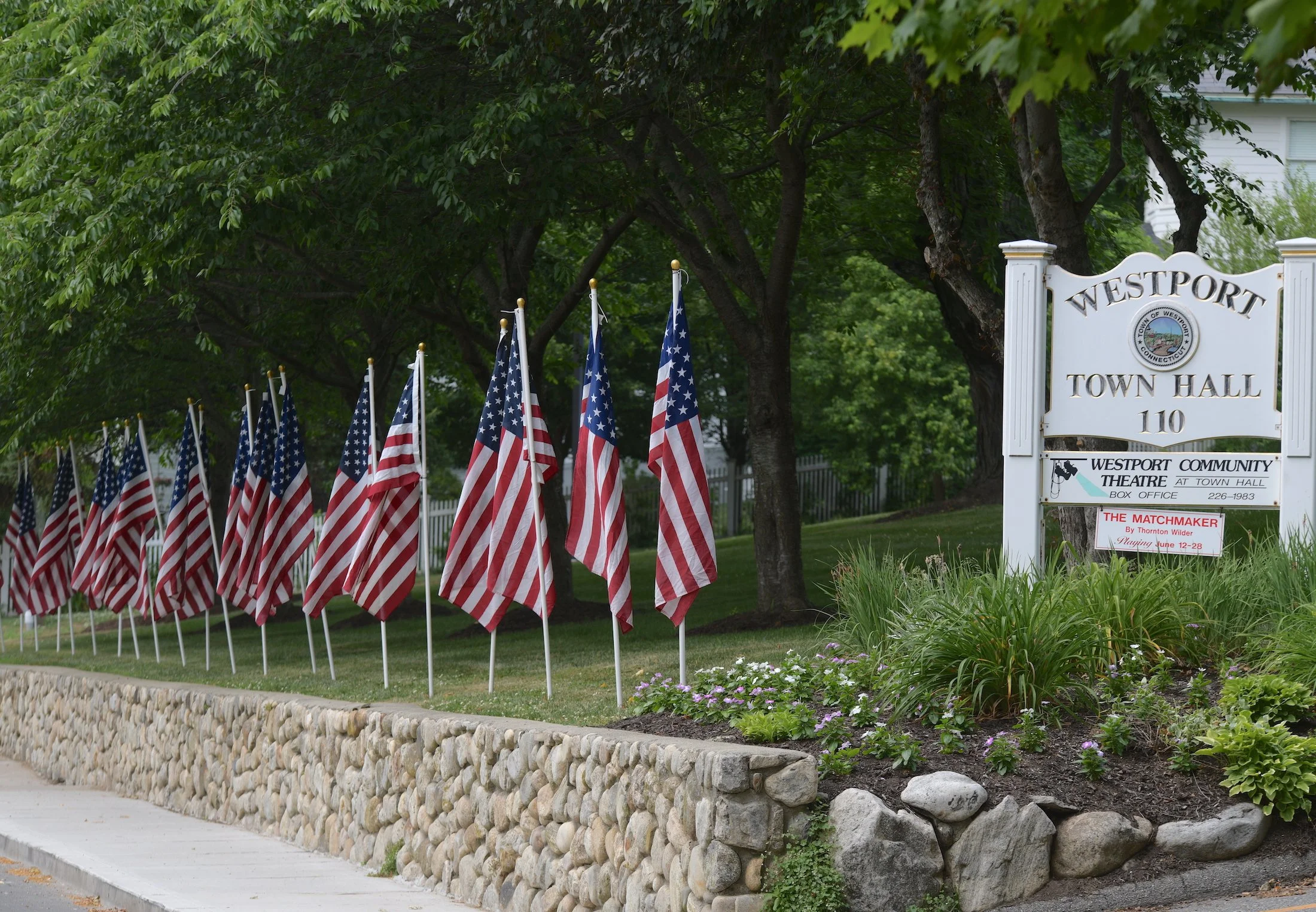
Flag Day Display At Town Hall
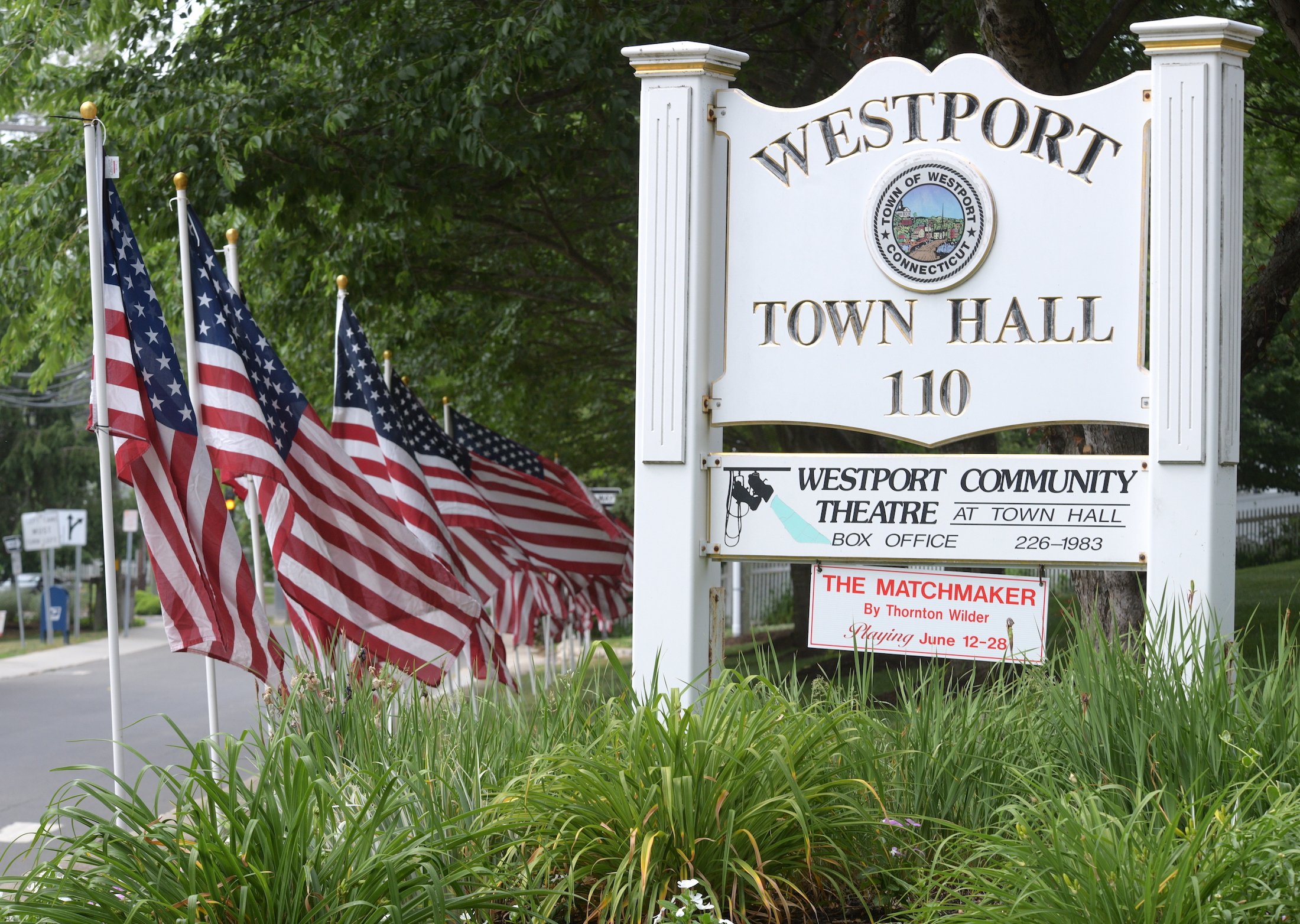
The row of American flags now lining the stonewall next to the sidewalk in front of Westport Town Hall wave proudly on June 14th, Flag Day.
Flag Day originated to commemorate the June 14, 1777, resolution by the Second Continental Congress that officially adopted the "Stars and Stripes" as the national flag of the United States. The holiday's journey to becoming a national observance involved several milestones:
The 1777 Resolution: On June 14, 1777, the Continental Congress passed a Flag Resolution stating that the flag of the United States would consist of 13 alternating red and white stripes and 13 white stars on a blue field.
Schoolhouse Origins (1885): Bernard J. Cigrand, a Wisconsin schoolteacher, is widely credited with the idea of a formal holiday. In 1885, he encouraged his students to observe June 14 as the "Flag's Birthday" and spent decades lecturing and writing to promote the cause.
First Presidential Proclamation (1916): President Woodrow Wilson issued a proclamation establishing June 14 as Flag Day, marking the first nationwide recognition of the event.
Official Congressional Act (1949): President Harry S. Truman signed an Act of Congress officially establishing National Flag Day on August 3, 1949. While it is a national observance, Flag Day is not an official federal holiday, meaning businesses and government offices generally operate on normal schedules.
Another interesting fact: Flag Day and the U.S. Army's birthday share the exact same date of June 14th due to historical milestones separated by exactly two years. The connections that tie them together include;
The Army's Birthday: On June 14, 1775, the Second Continental Congress authorized the creation of the Continental Army to defend the colonies against Great Britain, putting it under the command of General George Washington. The Flag's Adoption: Exactly two years later on June 14, 1777, Congress passed the Flag Resolution to adopt the "Stars and Stripes" as the official emblem of the United States.