

Great Egret Fishing Gray's Creek
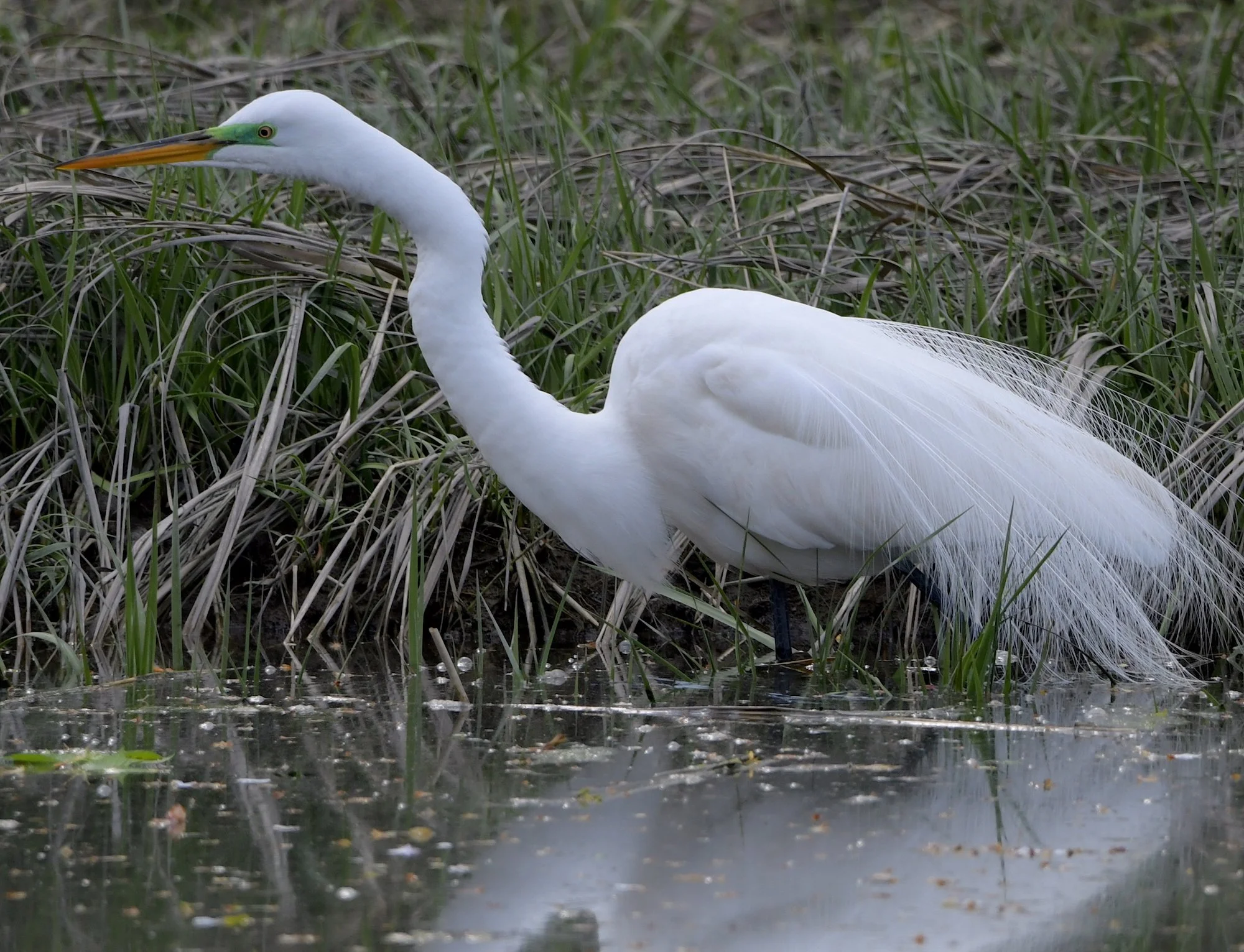
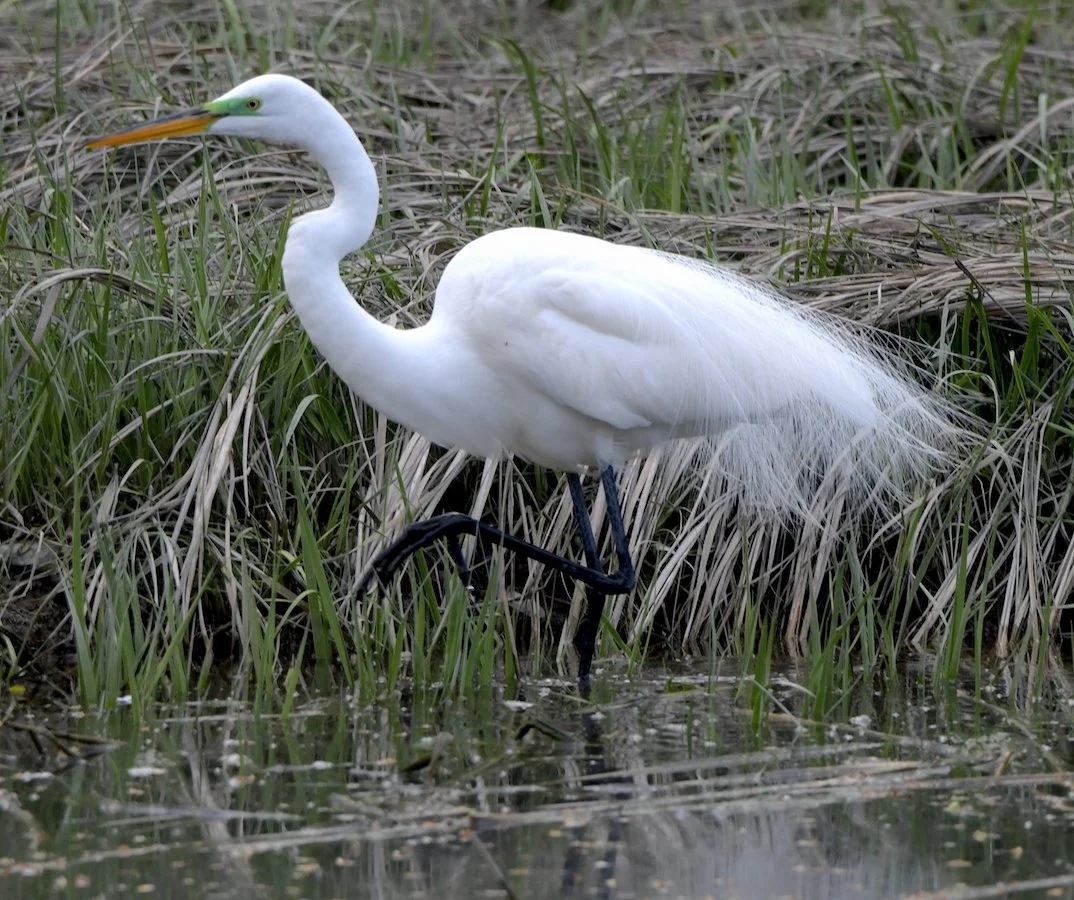
We spotted this beautiful Great Egret last week patiently search Gray's Creek for its lunch. The beautiful long, delicate plumes on its back long are prominent during breeding season.
Photos and Story By J.C. Martin For WestportLocalPress.com Click on an image to enlarge and open gallery.
Great Egret vs. Snowy Egret, what are the differences?
Great Egrets and Snowy Egrets are distinguished primarily by size and facial features: Great Egrets are much larger nearly 40” tall with yellow bills, (sometimes orange-ish in breeding season), a thicker neck and black legs/feet.
Snowy Egrets are smaller, around 24” with black bills, yellow lores (skin between eye and bill), and are known for their "golden slippers"; bright yellow feet contrasted with black legs and can have shaggy plumes on their chest and back. Great Egrets tend to be patient hunters, standing still in shallow water. Snowy Egrets are much more active, often chasing prey or stirring up the bottom with their feet to find food.
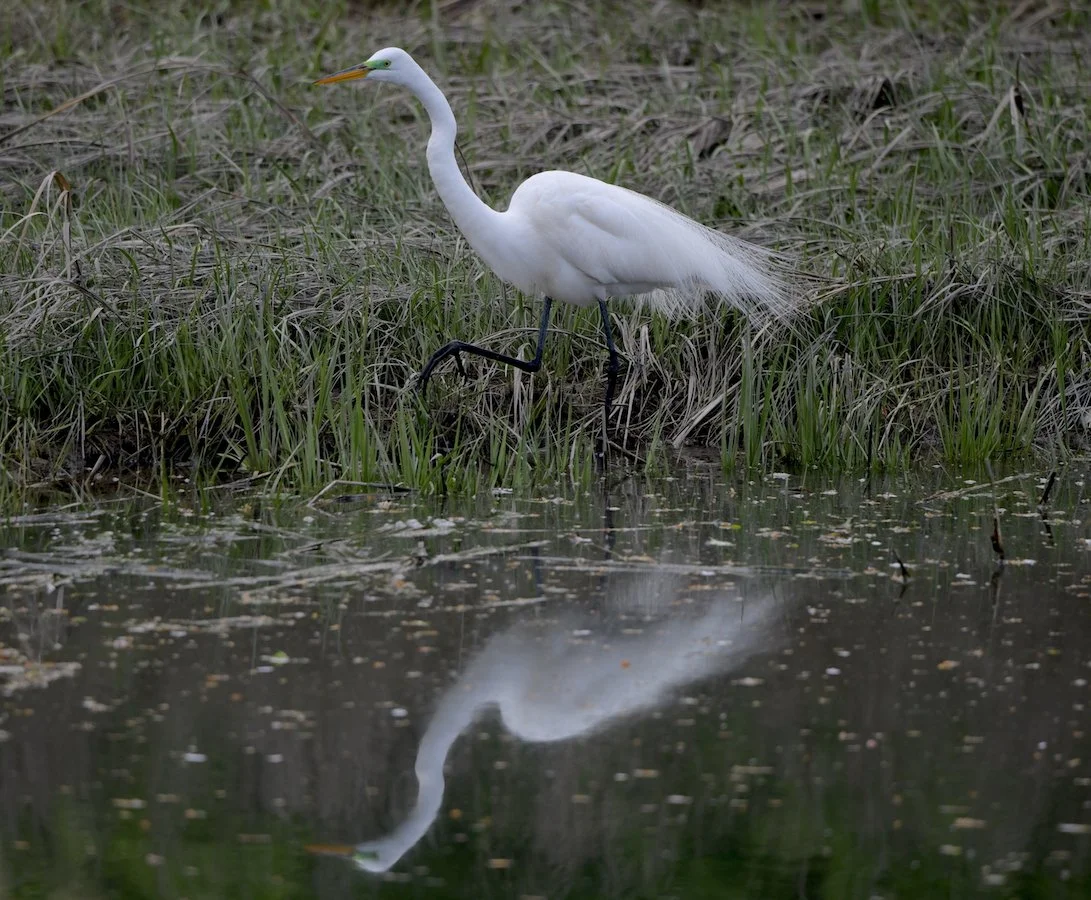
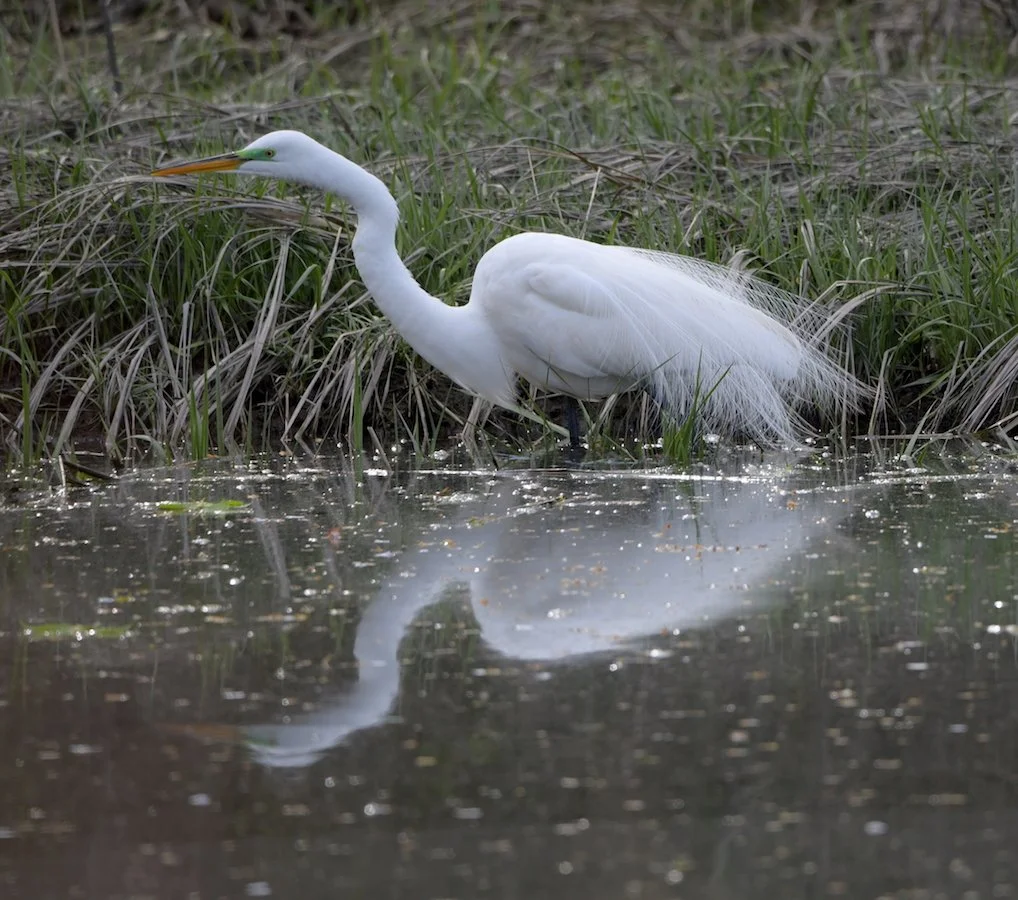
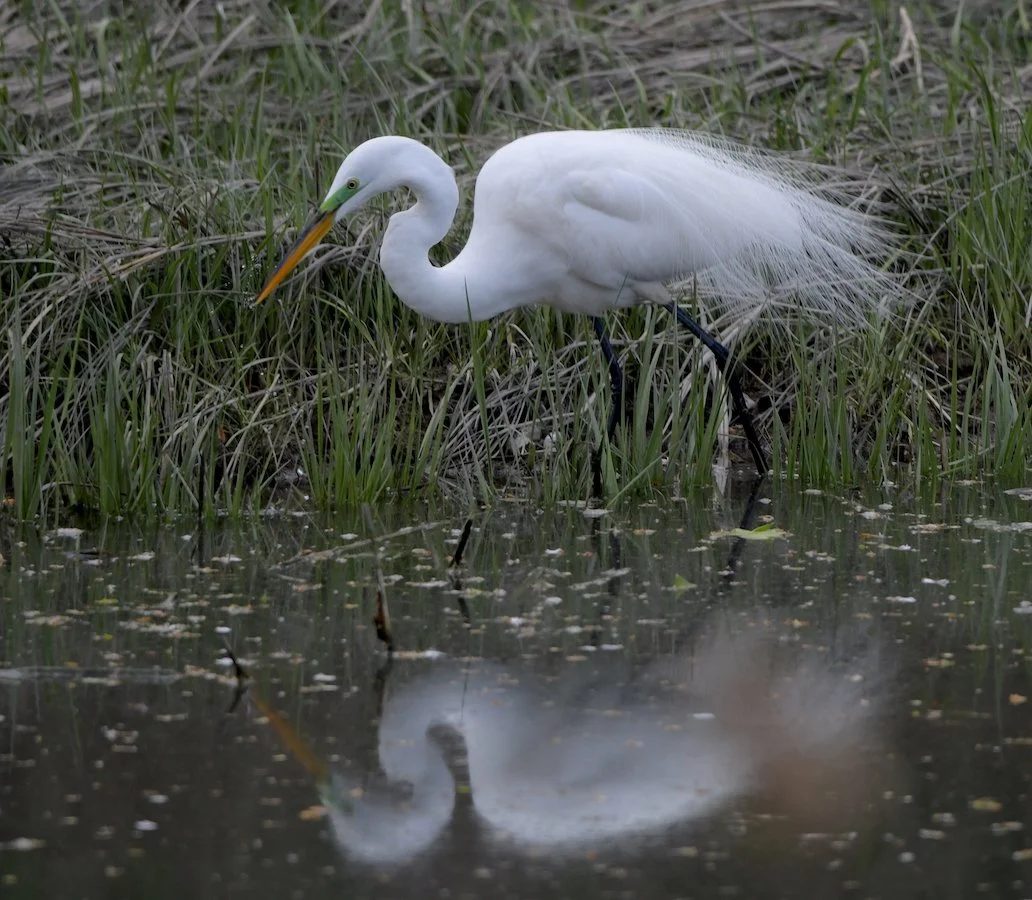
Great Egrets patiently and carefully walk through the body of water in which they are fishing.
The CT DEEP has great information on these beautiful birds including their history in CT. Visit CT DEEP Egrets
Photos and Story By J.C. Martin For WestportLocalPress.com Click on an image to enlarge and open gallery.
The great egret was a "very rare" Connecticut visitor by the mid-1800s due, in large part, to market hunting. Protective legislation passed in the early 1900s helped populations stabilize. By the 1920s, egrets were increasingly seen along the Connecticut coastline during migration. In the 1940s, they were regular coastal visitors and were even spotted in the Waterbury and Hartford areas. The first recorded great egret nest in Connecticut was in the Norwalk Islands in 1961. Today, the great egret nests in limited numbers on offshore islands along Connecticut's coast. The birds can be seen at many inland areas during migration and after the breeding season as they search for food.
Learn more about Egrets at All About Birds.org