

It's Spring And Love Is In The Air!
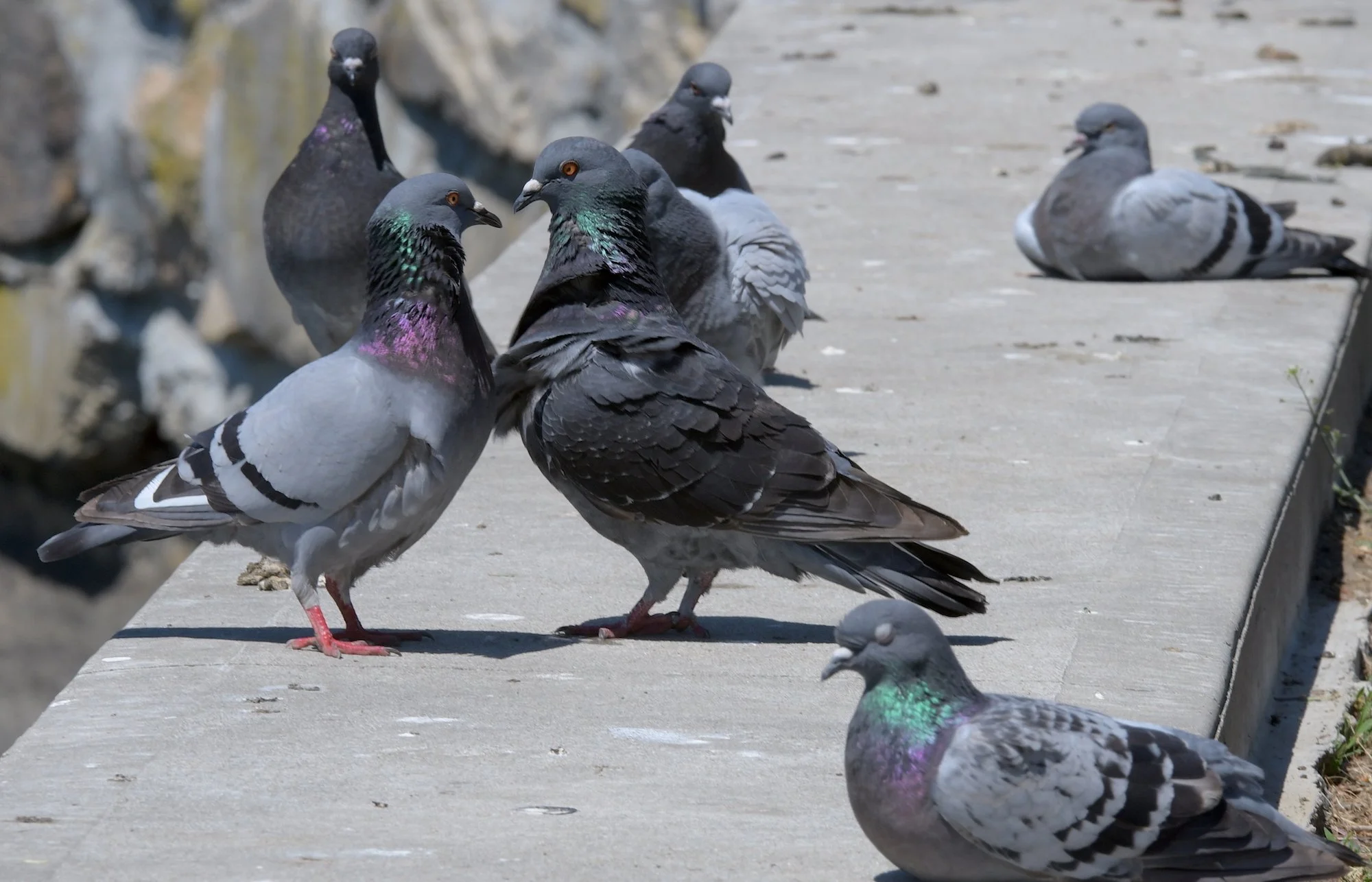
Apparently, the Saugatuck seawall at Jesup Green is place to mingle if you are a single pigeon.
Photos and Story By J.C. Martin For WestportLocalPress.com Click on an image to enlarge.
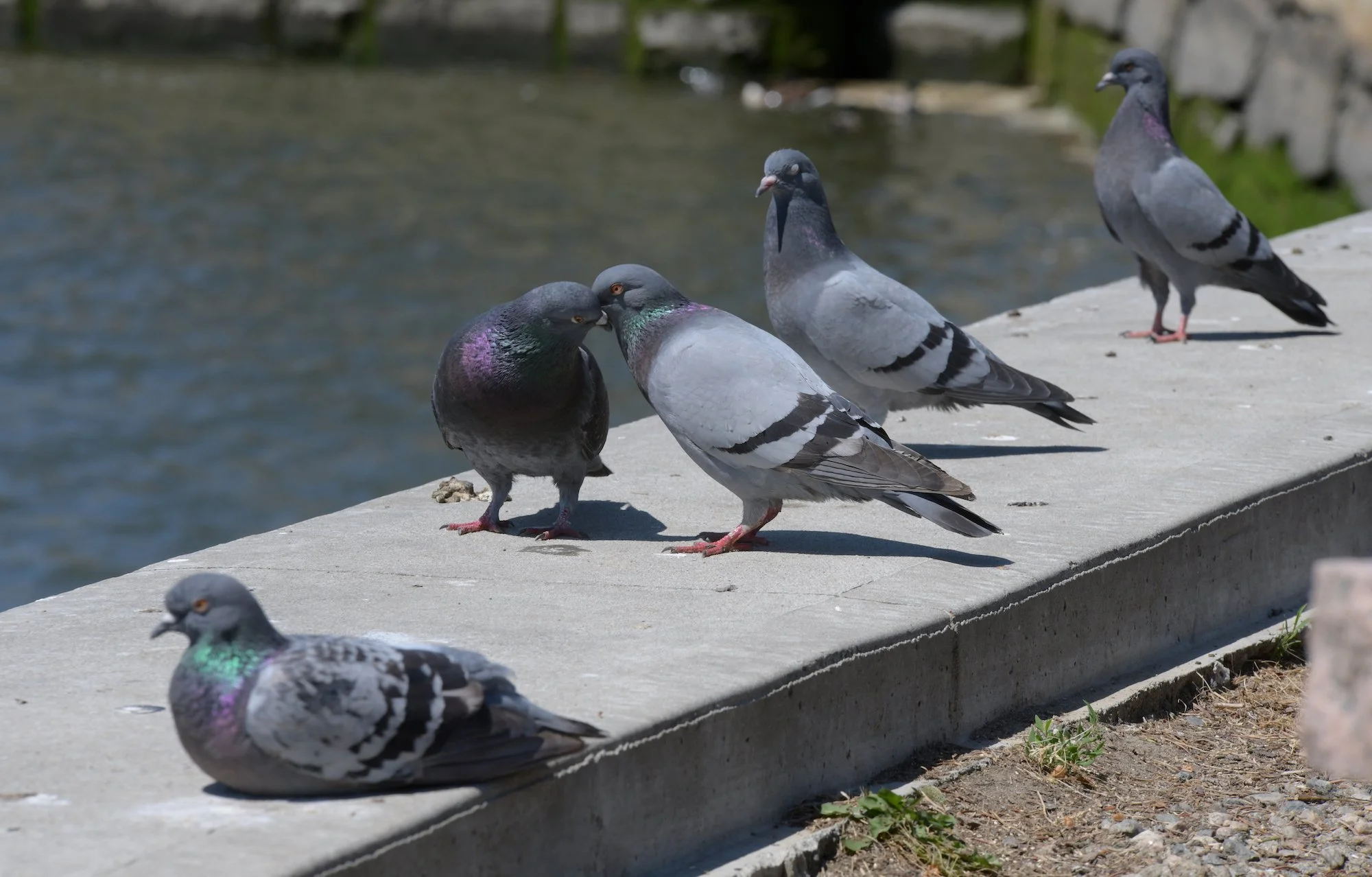
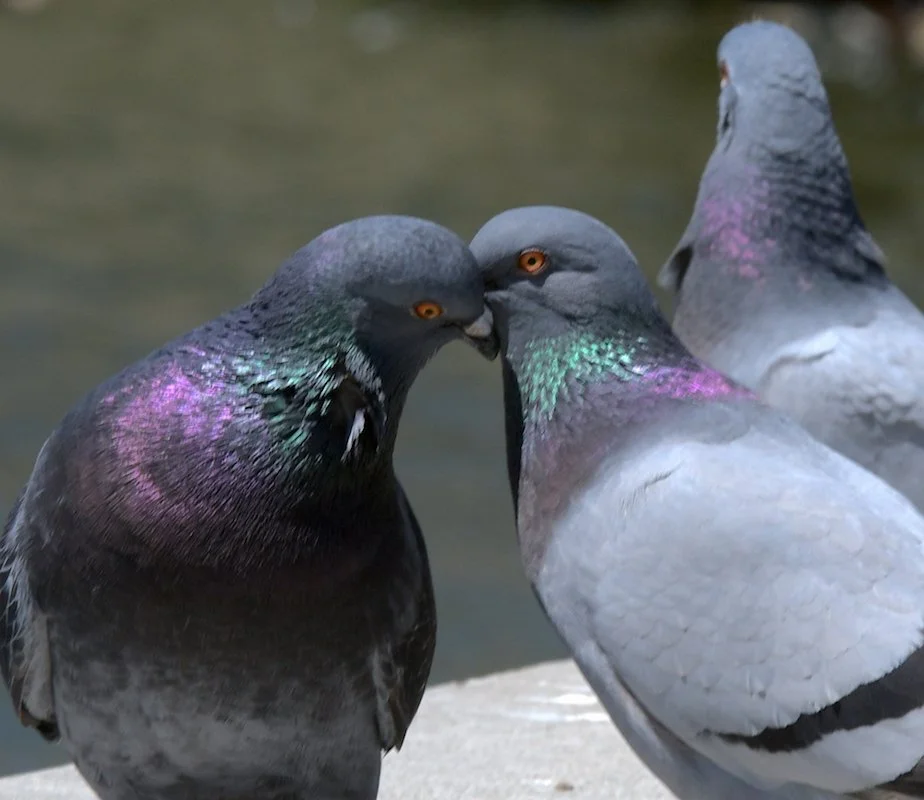
Perhaps it is the season, the romantic ambience of the Saugatuck River or just kismet, but whatever the reason these two pigeons clearly fell in love last week on the seawall near Jesup Green.
Photos and Story By J.C. Martin For WestportLocalPress.com Click on an image to enlarge.
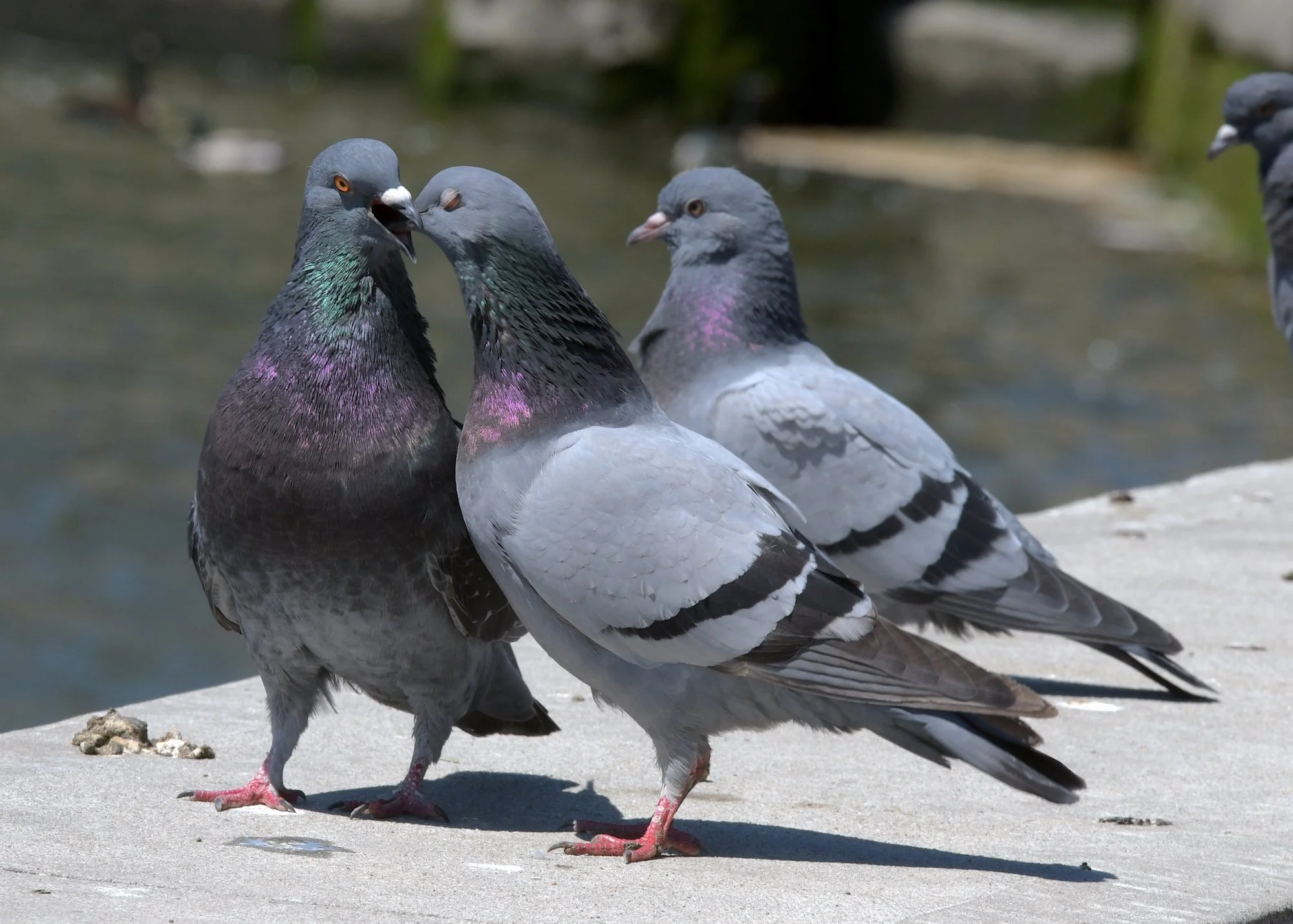
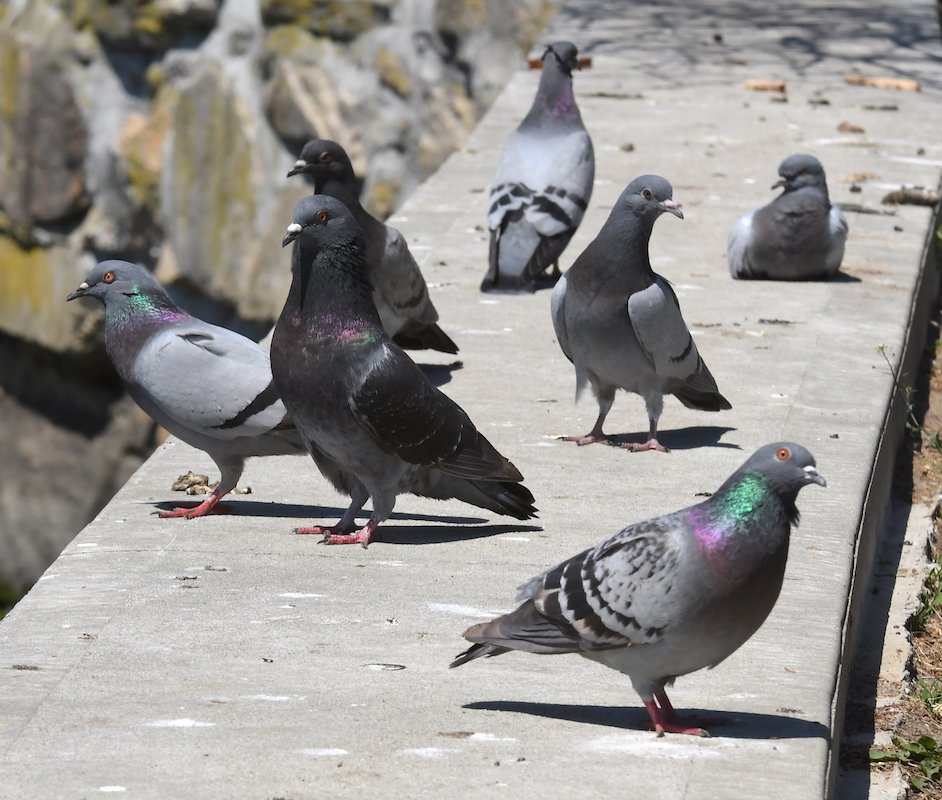
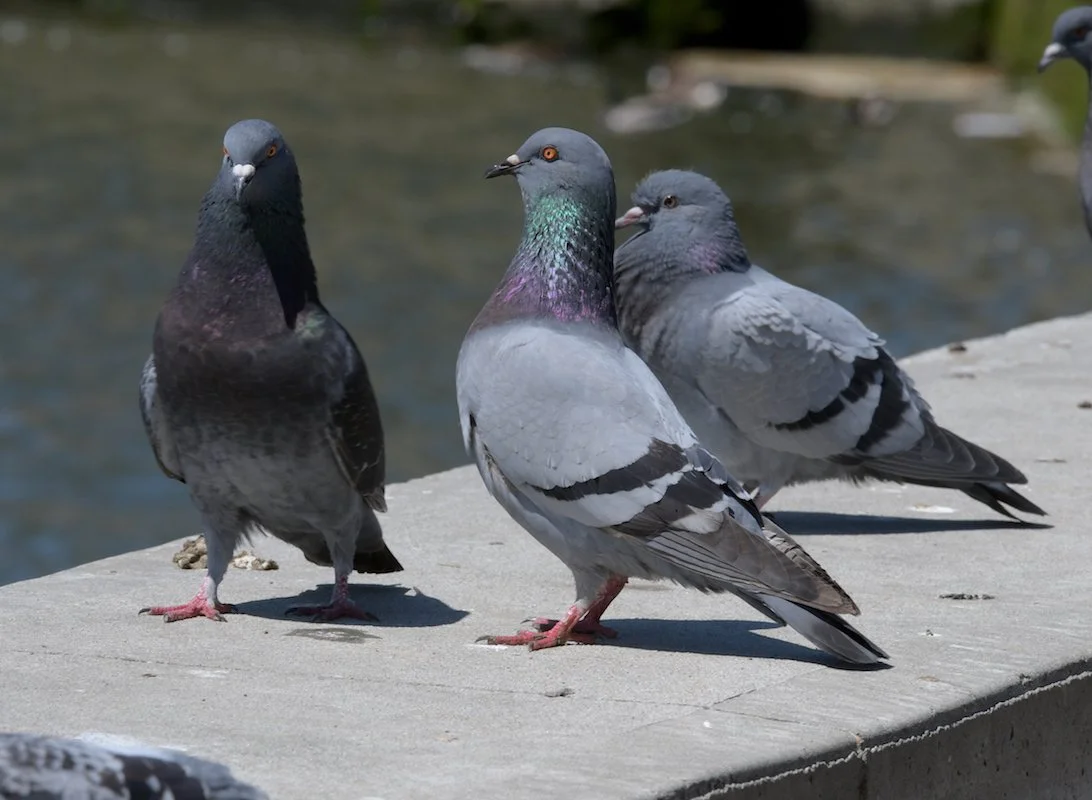
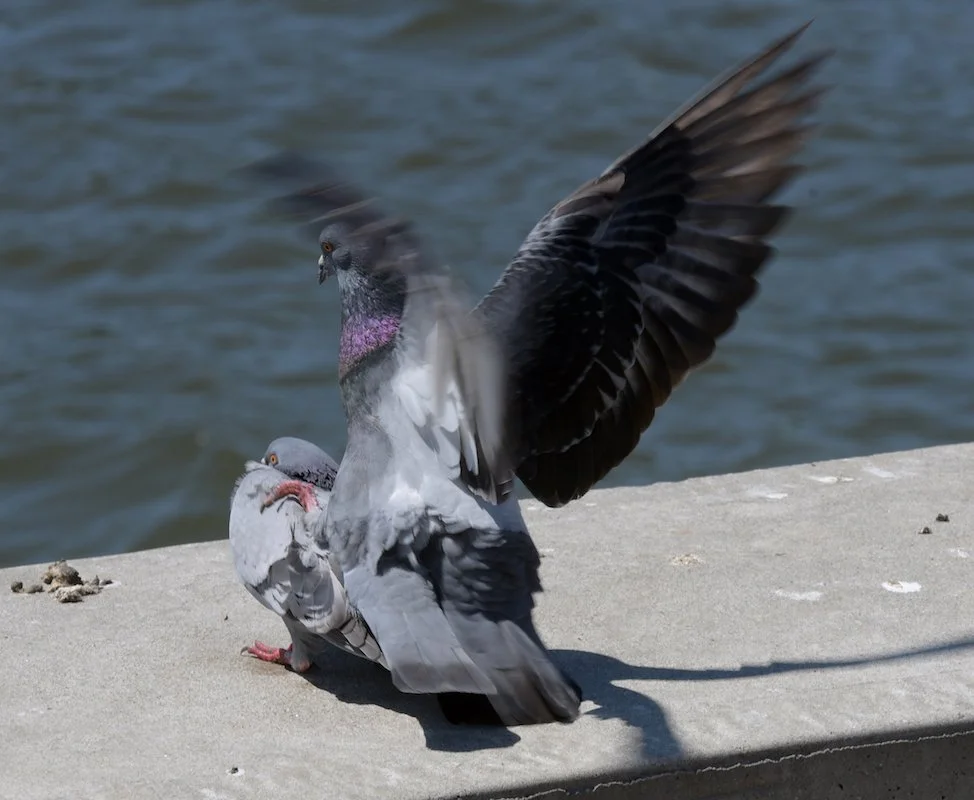
After a little flirting and then canoodling for some time these two birds realized that this was the real thing and decided to step up to the next level.
While telling a male pigeon (cock) from a female pigeon (hen) is notoriously difficult just by looking at them, that was not an issue at this encounter. While both share identical plumage, males are generally larger and more muscular, with thicker necks and rounder heads. Females are usually slightly smaller, sleeker, and have flatter heads.
Photos and Story By J.C. Martin For WestportLocalPress.com Click on an image to enlarge.
On a more serious note, never, ever feed bread to birds:
Probably well-meaning people regularly feed pigeons and ducks on the path alongside the river from the Post Rd. to Levitt Pavilion. First of all, while there is no public ordinance in town prohibiting the feeding of wild birds, the practice is strongly discouraged by the CT DEEP. What's more people feed birds bread which is about the worst thing one can do. Bread is very bad for birds. It acts like "junk food", offering empty calories and filling their small stomachs without providing the essential proteins, fats, and vitamins they need to survive.
Why Bread Is Dangerous For Birds:
Malnutrition: Because bread makes them feel full, birds stop foraging for natural, nutrient-rich foods. Over time, this leads to severe dietary deficiencies and health issues like metabolic bone disease.
Physical Deformities: A high-carbohydrate diet, especially for growing waterfowl like ducks and geese, causes a permanent wing deformity called "angel wing," which leaves them unable to fly or migrate.
Toxic Mold: Leftover bread in parks or on the ground quickly grows mold, which causes dangerous lung infections (Aspergillosis) in birds.
If you want to feed backyard birds or waterfowl, experts recommend skipping bread entirely. Instead, offer nutritious alternatives like birdseed, cracked corn, oats, or small pieces of leafy greens.
Ever See A Million Dollar Pigeon?
Actually, a $1.9 million pigeon to be exact. Here she is: New Kim Pigeon from Belgium
We recently were astounded to learn that there is a multi-million dollar industry for racing pigeons. In November 2020, a two-year-old Belgian racing pigeon named "New Kim" set the world record after being sold at auction for $1.9 million. The record-breaking transaction made global headlines and highlighted the booming, high-stakes world of elite pigeon racing. A fierce bidding war broke out on the online auction site PIPA, known as the Sotheby's of the pigeon world. It was largely driven by two wealthy, anonymous Chinese buyers operating under the usernames "Hitman" and "Super Duper"
This industry is based in large part in Belgium, The sport of pigeon racing took root in Belgium in 1818 with the modern racing system involving five distance categories, ranging from short sprints up to 750 km. Belgium based Pigeon Paradise, (PIPA) is the world's leading racing pigeon auction house, handling roughly $46 million in sales annually.
The biggest payouts in the sport come from international "One Loft Races" (OLRs), where birds from all competitors are raised together to test the bird's true genetics rather than the trainer's local loft location. The biggest prizes in pigeon racing are found in "One Loft Races" (OLRs), where prize pools range from $100,000 to over $2,000,000.
This CBS 60 Minutes story (link below) is eye-opening to say the least, and describes the "pigeon mafia" in Belgium, an international organized crime rings that target elite racing pigeons worth millions of dollars to sell them or their offspring on the global black market. These criminal networks have turned the traditional sport of pigeon racing into a high-stakes arena for theft and smuggling, primarily driven by skyrocketing demand from wealthy buyers in China. Their tactics are likened to "Mission Impossible", cutting holes in roofs or fences to infiltrate high-security lofts. Belgian breeders are fighting back, using laser sensors, motion detectors, and biometric tracking. Veterinarian Ruben Lanckriet maintains a genetic database of over 100,000 birds to verify parentage and identify stolen stock. Owners now plant microchips and use DNA profiling to verify bird identities.Loft security: Breeders install military-grade surveillance, motion sensors, and guard dogs.
Learn more by clicking the links below:
60 Minutes: Making $46 Million selling pigeons or millions racing them.
60 Minutes - The Pigeon Mafia: How high-priced pigeons became an organized crime target.